Is the NUK Orthodontic Pacifier Worth It? A Decision-Focused Review
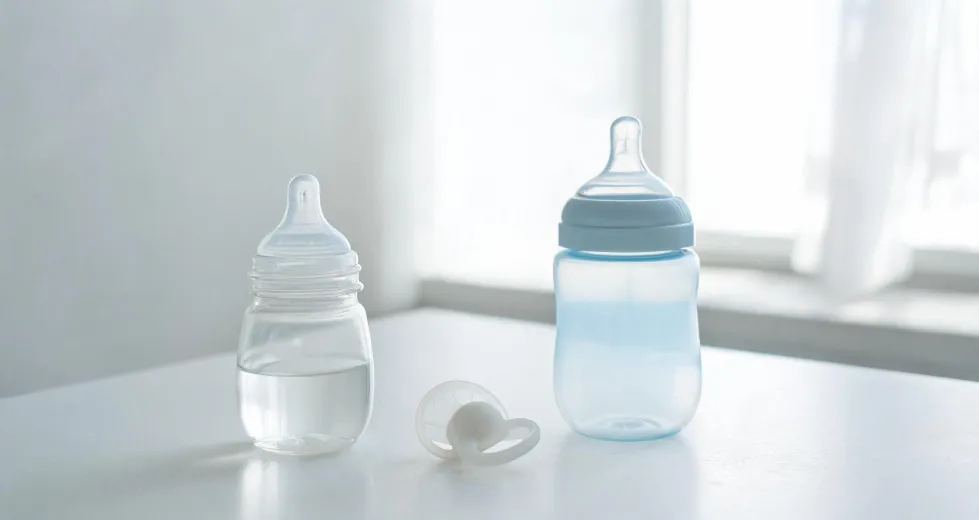
You're standing in the baby aisle, holding a NUK orthodontic pacifier in one hand and a cheaper brand in the other. One carries a hospital-halo reputation; the other leaves more money in your wallet. It's tempting to let the 'orthodontic' label settle the debate, but the evidence suggests the real choice is between brand trust and your own daily cleaning routine. This guide will help you weigh those factors and walk away with a clear rule you can use for any pacifier.
NUK Orthodontic Pacifier: Is It the Right Call for Your Baby?
Should you buy a NUK orthodontic pacifier for your baby? The honest answer is conditional: it's a strong choice if your little one falls within NUK's age stages and you're ready for a daily sanitizing routine. The real trade-off isn't between NUK and cheaper brands alone—it's between the reassurance of a hospital-trusted label and the practical work of keeping any soother germ-free. Many parents assume the 'orthodontic' label means guaranteed dental benefits, but the evidence indicates that's a misunderstanding. In reality, the label describes a shape designed to support natural feeding, not a clinical promise. What matters more is how the product fits your baby's development stage and whether you can consistently clean it. For a newborn under three months, daily sanitizing is especially important; for older babies, the calculus may shift. So before you add one to your cart, let's break down what the brand actually offers, what the design philosophy really means, and what the cleaning guidance demands. Along the way, you'll pick up a simple rule you can reuse for any pacifier purchase.
To understand the stakes, look at what NUK itself emphasizes. The brand's official site opens with two promises: it adapts to a baby's natural way of feeding and soothing, and it claims the number-one spot in hospital use. That hospital badge is the first evidence to weigh. It suggests that NUK products are trusted in medical settings, which is a meaningful signal of reliability. But notice what it doesn't say—it doesn't claim that the orthodontic pacifier alone prevents dental issues or that hospital preference applies specifically to soothers. NUK's positioning is broad, covering bottles, teethers, and feeding accessories. The phrase 'nr. 1 in hospital' is a brand-level assertion, repeated across the site as part of its identity. So the hospital trust transfers to the brand, not to a specific clinical outcome. For your decision, this means the reassurance is real but partial; it lowers the risk of a poor-quality product or an ingredient concern, but it doesn't eliminate the need to examine whether the pacifier fits your baby's age and whether you can maintain a rigorous cleaning schedule. In short, the evidence shows you NUK is a credible manufacturer, but it doesn't tell you that an orthodontic shape is medically necessary or that any caretaker can keep up with the hygiene demands.
What Does 'NUK #1 in Hospital' Actually Tell You?
But how much should that 'number one in hospital' claim actually move your decision? The blunt answer: less than you might think. A hospital preference for a brand tells you about the manufacturer's reputation across a wide range of feeding products, not about the specific performance of one pacifier model. It's a useful trust signal, but it's not a guarantee of fit, safety, or dental benefit. In fact, the claim can distract you from the details that matter more, like whether the soother is right for your baby's age and whether you can keep it clean. Consider what the phrase is really doing: it forges an emotional connection with quality and safety, which is powerful when you're tired and overwhelmed. But marketing language and clinical evidence are different things. A hospital badge doesn't mean the pacifier has been tested for orthodontic effects, doesn't tell you which stage of development it suits, and doesn't address the hygiene burden. So when you see 'nr. 1 in hospital,' your first response should be to ask, 'For what exactly?' If the answer is feeding products broadly, then you still need to evaluate the pacifier on its own merits: shape, materials, age range, and how easy it is to sterilize. That's why the honest move is to demote the hospital claim from a deciding factor to a tie-breaker. You're not dismissing the brand's credibility—you're just refusing to let a broad reputation override the specific requirements of your baby's mouth and your daily routine.
Let's put that hospital claim under a magnifying glass. Both the main page and its duplicate excerpt emphasize the same two messages: 'Adapts to baby's natural way of feeding and soothing' and 'NUK nr. 1 in hospital.' The repetition matters—this is the core identity NUK wants you to remember. But what does it confer on an orthodontic pacifier? First, it tells you the brand has built its reputation around feeding-related products, which is relevant because a soother is a feeding-adjacent item. Second, hospital usage suggests that healthcare professionals consider NUK safe and reliable for infants, which reduces the baseline risk of poor design or harmful materials. However, the evidence ends there. Nothing in these excerpts says that the orthodontic shape has been clinically validated for dental development, nor that the pacifier is more effective than others. The claim is about the brand, not the product. So for your decision, this evidence acts as a floor: it raises the minimum quality you expect. But it doesn't set the ceiling—your baby's age fit and your cleaning capacity are what determine whether the pacifier actually works for you. Treat it as a starting point for trust, then move on to the factors that make a difference in your home.
Feeding-First Design: More Than a Shape
If the orthodontic label isn't a clinical guarantee, then what does NUK's design philosophy actually promise? The answer lies in the brand's overarching idea: adapting to a baby's natural way of feeding and soothing. This means the soother is engineered not just to be a pacifier, but to fit into a broader feeding ecosystem that includes bottles and other accessories. For parents, this translates into a product that may feel more intuitive for the baby, because it's designed to complement rather than fight the baby's oral instincts. But it still doesn't override the need for age-appropriate sizing. The design philosophy tells you about intent—NUK wants to support natural oral movements and make the transition between breast or bottle and soother smoother. Yet intent alone doesn't guarantee that every model works for every child, and it certainly doesn't turn the 'orthodontic' shape into dental proof. So the smart move is to treat the design story as a reason to look closer at the specific model, not as a substitute for checking the recommended age range and your baby's individual mouth development. The philosophy is a lens, not a verdict.
NUK's own materials reinforce this feeding-first framing. The page that covers baby development repeatedly ties products to stages: 'Pregnancy 0-6 months 6-18 months 18+ months,' and it clumps together soothers, bottles, and learner cups under the same 'natural growth' umbrella. Those stage bands appear over and over, reinforcing that NUK expects parents to match products to a specific age window. The subtext is that NUK sees a soother as one piece of a continuous feeding journey, not an isolated device. For you, this means the pacifier isn't just a shape—it's part of a system designed to grow with your child. But here's the catch: the same materials don't provide model-specific specs for orthodontic effects. They mention soothers in passing but don't show clinical data or age-specific recommendations beyond the broad stages. So the design philosophy gives you a coherent story, but the story isn't a substitute for checking which exact soother matches your baby's stage. Over three months, the '6-18 months' stage might be relevant; for a newborn, you'd look at '0-6 months.' The evidence tells you NUK thinks about the whole journey, but it leaves the product-level decision to you. In practice, that means you should take the brand's design narrative as a useful orienting guide, then zoom in on the specific product's age range before you buy.
The Cleaning Reality That Can Change Your Choice
Now for the factor that quietly decides most pacifier purchases: cleaning. How much does daily sanitizing really matter? The answer is: a lot more than the shape. A soother spends hours in your baby's mouth, gets dropped on floors, and sits in damp bags—each contact can introduce germs. For young infants, especially those born early, a contaminated pacifier can raise the risk of infections. If you can't commit to a rigorous routine—washing after every drop, sanitizing on a regular schedule, and making sure every part dries fully—then even the most thoughtful orthodontic design won't keep your baby safe. The brand reputation means little if the soother isn't kept clean. And the burden is real: it adds steps to an already busy day. But it's also non-negotiable for young infants. You might tell yourself you'll be diligent, but night feedings and exhaustion tend to erode good intentions. So the cleaning reality isn't a footnote to the NUK decision—it's the deciding factor that can override brand preference. Before you choose a pacifier, ask yourself whether the product's shape and materials make cleaning easy—whether it's dishwasher-safe, whether it comes apart fully, and whether you can keep up with the frequency. If the answer is no, no amount of brand prestige can fix that.
The CDC's guidance on infant feeding items makes the cleaning priority explicit. According to the agency, items that touch milk—bottles, nipples, and yes, soothers—should be cleaned daily, and sanitized for extra germ removal at least once a day if your baby is younger than 2 months, born premature, or has a weakened immune system. The reasoning comes with a stark reminder: improper cleaning can lead to contamination, and in a documented case, a contaminated pump part was linked to the death of a preterm infant. The same logic applies to any mouth-contact item, including orthodontic pacifiers. So when you're weighing NUK's hospital reputation against a generic brand, the guidance flips the script: hygiene is the variable that actually determines risk. NUK's design philosophy and hospital standing are about durability and fit, but they don't remove the need for sanitizing. In fact, if you're considering NUK for a newborn under 2 months, the daily sanitizing requirement becomes a hard condition. For older babies, the frequency may drop, but the baseline cleaning stays. This is why the decision framework should put cleaning capacity at the center: a pacifier that you can consistently keep clean is safer than one with a prettier shape that sits dirty.
A Simple Decision Rule for Choosing (or Skipping) NUK
So how do you turn all this into a decision? Here's a simple rule that works for any pacifier, including NUK: First, check the age range. If your baby is in the 0-6 months stage, look for a soother designed for that window; for 6-18 months, choose accordingly. Second, assess your cleaning reality. Can you commit to daily sanitizing for a newborn, or at least regular cleaning for an older baby? If you already struggle to keep bottles sterile, a pacifier just adds to the burden. Third, weigh brand trust as a tie-breaker, not a decider. NUK's hospital standing gives you confidence in materials and design, but it doesn't override age fit or hygiene. So the rule is: choose a pacifier that matches your baby's stage and your cleaning capacity first; if two options are equal on those fronts, prefer the brand you trust more. And remember, the 'orthodontic' label is a design choice, not a health guarantee. This rule works for NUK and for any alternative—it puts the practical factors where they belong, and lets brand reputation fill in the gaps.
To see the rule in action, consider what NUK's own stage messaging implies. The brand's content for '6 months old baby onwards' shifts focus to exploration, first teeth, and learner cups—soothers are no longer the centerpiece. That tells you NUK itself expects parents to retire the pacifier (or at least reduce its role) as the baby grows. For your final verdict: if your baby is in the early stage, a NUK orthodontic soother can be a solid choice—the hospital trust and feeding-first design give you a reliable baseline. But the decision stands only if you're prepared to clean it diligently, especially under 2 months. Even the 'number one in hospital' badge doesn't change this calculus—it's a reason to trust the brand's process, not to skip the basics. If your baby is approaching 6 months or beyond, start thinking about whether a soother is even the right tool; your energy may be better spent on teethers or cups. The evidence doesn't say NUK pacifiers are bad—it says they're one component in a journey that evolves. So the final call is yours: match the product to the stage, keep up the hygiene, and let brand reputation be the cherry on top, not the cake.
Run the two-question test at the shelf: Does this soother match my baby's stage, and can I clean it every day? If both are yes, NUK's reputation is a bonus. If not, no brand badge can close that gap.

Miriam Adler
Miriam Adler is an educational and STEM toy analyst specializing in busy boards, Montessori-style manipulatives, learning towers, sound books, reading pens, pretend-play sets, and early learning toys. She applies ASTM F963 and IEC 62115 methods while evaluating small-part hazards, accessible edges, switch durability, sound output, battery access, pull force, and age-appropriate task complexity. Her work helps parents, retailers, and product teams choose learning products that align developmental goals, supervision needs, interaction design, and the intended age stage.
Leave a Reply