NUK Orthodontic Pacifier: Does the Shape Matter More Than the Brand?
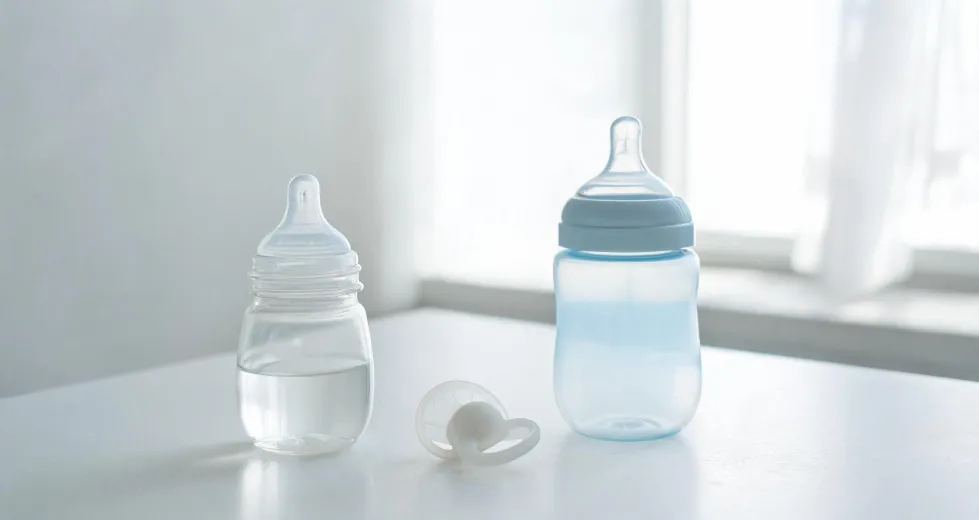
It is 11 p.m., the baby is finally down, and you are stuck comparing two pacifiers on your phone: the NUK orthodontic soother with its flat, symmetrical nipple, and the brand's classic round model. You have read that 'orthodontic' is supposed to be better for jaw development, but your four-month-old has already rejected three pacifiers this week. The real dilemma is not which one has the fancier shape. It is whether the extra thought behind the design will survive contact with a baby who has very clear opinions, and whether you can keep the chosen soother clean enough to justify the routine. A tired parent needs a decision rule, not a feature list, because the wrong choice means another product in the drawer and another night of soothing with a pacifier that ends up on the floor.
The 11pm dilemma: should you swap to the NUK orthodontic soother?
At 11 p.m., the baby is finally down, and you are stuck comparing two pacifiers on your phone: the NUK orthodontic soother with its flat, symmetrical nipple, and the brand's classic round model. You've read that 'orthodontic' is supposed to be better for jaw development, but your four-month-old has already rejected three pacifiers this week. The real dilemma is not which one has the fancier shape. It is whether the extra thought behind the design will survive contact with a baby who has very clear opinions, and whether you can keep the chosen soother clean enough to justify the routine. A tired parent needs a decision rule, not a feature list, because the wrong choice means another product in the drawer and another night of soothing with a pacifier that ends up on the floor.
NUK's own materials frame this choice carefully. The brand's site opens with 'Adapts to baby's natural way of feeding and soothing' and flashes 'NUK nr. 1 in hospital.' That message works: it positions the soother as a feeding aid tied to natural development and trusted pediatric care. In the baby aisle, the hospital badge feels like a shortcut to reliability. But the evidence only licenses a limited conclusion. It tells us that NUK is confident in its design and that hospitals buy it, not that the orthodontic shape will work for your child's mouth. The brand context raises the floor of trust, yet it does not answer the acceptance question. First, separate the brand's promise from the mechanical reality you can test at home. It is a start, not a finish; you still have to run the test.
In this guide, we'll walk through the decision in order. First, we will examine what 'orthodontic' actually describes, because most parents assume it means a medical guarantee when it really refers to a flat, symmetrical shape. Second, we will add the hygiene angle, since the CDC now tells parents to sanitize feeding items daily, and that routine depends on materials and design. Third, we will set up a simple comparison between the orthodontic option and a classic round model, using criteria any parent can run. Finally, we will land on a reusable rule that works for any pacifier. The goal is to get you to a decision in under a minute.
What 'orthodontic' actually does to your baby's mouth
So what does 'orthodontic' really mean in a pacifier? The term does not refer to braces or tooth straightening. It describes a nipple that is flat and symmetrical, designed to fit the natural shape of a baby's palate and to encourage the tongue to rest in a position similar to breastfeeding. The flat top leaves room for the tongue, and the symmetrical shape means the pacifier does not need to be flipped to the correct side, which is a small practical win at 3 a.m. The mechanism is about supporting tongue placement, not promising perfectly straight teeth. That distinction matters because parents often overread the label. The orthodontic design can be a meaningful feature, but it is a feature, not a health outcome. Whether it helps depends on how your baby sucks and whether the shape feels natural.
NUK's own content reinforces the natural-development story. The brand's pages talk about celebrating milestones and supporting a baby's 'natural growth,' with products divided into stages from pregnancy to 18 months and beyond. One page describes a soother as part of the 'Perfect Match' range that works alongside breastfeeding, which tells you that NUK sees the product as a feeding companion rather than just a tear-soother. That framing is consistent with the orthodontic design: if the nipple mimics the shape of a mother's nipple during nursing, the soother becomes a training tool for tongue position. But the evidence here is about brand philosophy, not clinical proof. It shows the shape is not a gimmick but central to NUK's identity. It doesn't tell us every baby will accept it, so watch your baby's reaction rather than trust the brochure.
This leads to the misconception we need to clear up. Many parents assume that 'orthodontic' is a one-size-fits-all health guarantee, as if buying the right label automatically protects teeth and jaw. The real differentiator is not the word but the geometry, and even that only matters if the baby's instinctive sucking pattern matches. A baby who prefers a round, bulbous nipple may clamp down on an orthodontic shape and fuss; a baby who likes the flat form may settle instantly. So the brand's positioning and the clinical-sounding name are useful signals, but they are secondary to fit. The non-obvious truth is that a cheap round pacifier the baby accepts may beat a costly orthodontic one that gets rejected, simply because the accepted one does its job.
The hidden cost: daily sanitizing and the CDC rule
Now we come to the hidden cost that rarely appears in product photos: the daily cleaning routine. A pacifier gets dropped, licked, and handled constantly. The question is whether you can keep it clean without losing your mind. For many parents, the orthodontic design adds crevices that can trap milk and saliva, which means sanitizing becomes a daily fact of life. This matters because a soother that is miserable to clean will get cleaned less often, and that is where the decision stops being about teeth and starts being about hygiene. Before you choose, you need to know what official guidance requires and what that means for a product you will handle multiple times a day.
The official standard comes from the CDC, and it is stricter than most parents expect. The agency's guidance on infant feeding items says to clean them daily and to sanitize for extra germ removal, especially when a baby is younger than 3 months, was born prematurely, or has a weakened immune system. A joint working group of the Healthcare Infection Society and the Infection Prevention Society published similar guidance in 2015, emphasizing decontamination of milk-collection kits and related items at home and in hospitals. For a pacifier, sanitize it at least once a day, ruling out models that can't survive boiling, steam, or a dishwasher without warping. This evidence changes the judgment from 'does the shape help teeth?' to 'can this material and design absorb a daily sanitizing routine?' That practical filter favors products with smooth, sealed surfaces and clear, honest care instructions.
The CDC's guidance affects everyday parenting. A popular parenting site points out that before 2017 there was no official protocol for cleaning pump parts, and the new guidelines came after a preterm infant died from contaminated equipment. That outcome makes the daily chore feel like a genuine safety baseline. For the pacifier decision, this means you should look for a model that is explicitly dishwasher-safe or easy to sterilize, because the most hygienic product is useless if you stop sanitizing it by week two. It also means that a pacifier with a complicated vent or fabric loop may be harder to keep clean, which is a strike against it no matter how good the orthodontic shape is. The sanitizing rule is the invisible second contestant in this comparison.
NUK orthodontic vs. the round soother: what to test
With the shape and hygiene in view, we can set up a fair comparison between the NUK orthodontic soother and the round classic. The point is not to declare a winner in the abstract; it depends on your baby's mouth and your schedule. We compare along three dimensions: acceptance, cleaning, and durability. Acceptance is the baby's immediate reaction and whether they keep the pacifier in for more than a few minutes. Cleaning is how much effort it takes to sanitize it daily without damaging the silicone or plastic. Durability covers whether the nipple stays intact and the shield holds up after weeks of boiling or dishwasher cycles. These three dimensions let you test any pacifier at home, stripping away the marketing language that makes every option sound perfect.
Third-party testing culture offers a useful mindset. A lab-like review site buys all the products it tests, receives no freebies, and compares efficiency, comfort, and ease of use through hands-on testing. That is exactly the discipline you should borrow for a pacifier. Do not rely on a brand's own claims or a single influencer's opinion; run your own two-minute test. Put the pacifier in the baby's mouth, watch the lips close around the nipple, and notice whether the tongue seems to rest naturally or whether the baby gags, spits, or chews. Then time how long the baby keeps it. A pacifier that survives a ten-minute car ride without being flung out is a strong signal. The third-party mindset also reminds you that this soother is not the only product that can pass these tests; your job is to find the one that passes for your baby.
Here is a practical test protocol you can run tonight. First, buy only one or two pacifiers at a time. Wash and sanitize both according to their instructions. Offer one to the baby after a feeding, when they are calm but not hungry. Watch for three signs: a relaxed face, a steady sucking rhythm, and a pacifier that stays in place for at least five minutes. Then switch to the other model and repeat. Over the next two days, alternate, and try them during car rides and nap time. Note which one the baby accepts more consistently. Meanwhile, run the cleaning test: boil or run each through the dishwasher once, and check for warping, clouding, or stuck moisture. That twenty-minute experiment gives you answers no review page can provide.
The verdict and a reusable pacifier decision rule
So what is the verdict? After weighing the brand's hospital positioning, the orthodontic mechanism, and the daily sanitizing mandate, this soother is a credible choice for parents who want a jaw-friendly shape and a trusted name. NUK's own pages advertise its hospital leadership and stage-based range, from '0-6 months' to '18+ months,' which tells you the company thinks in milestones. That is reassuring, but it is not everything. The verdict has boundary conditions: it only pays off when the baby accepts it and the family can keep up with sanitizing. If the NUK shape wins the mouth test and your dishwasher can handle it, buy with confidence. If the baby rejects it, no amount of brand prestige will make it work. The verdict is not 'NUK is the best' but 'NUK is right for a specific fit-and-hygiene profile.'
The reusable decision rule is simple: fit first, brand second. Before you look at any label, offer the pacifier to your baby and watch what happens. If the baby keeps it in and seems calm, move to the cleaning test. If the baby rejects it, stop—no feature or badge will fix a mouth that says no. Once fit passes, check cleaning: can you sanitize it daily without hating life? If it survives boiling or the dishwasher and dries without trapping water, it deserves a spot in the rotation. Only after both tests pass should you let brand reputation and the 'orthodontic' word break the tie. It sounds simple but reverses the instinct to buy the most impressive product. That order protects you from overvaluing a noun and underweighting the daily chore.
A boundary condition deserves mention. If your baby has rejected every pacifier, don't pay more for the most clinical-sounding option; buy a cheap round one, test fit, then consider an upgrade. Similarly, if keeping bottles and pump parts clean is a struggle, a high-maintenance pacifier becomes stress, not soothing. In those cases, a simpler design that you can rinse and boil without thinking may be the better health choice, even if it lacks the orthodontic label. The decision rule respects the two limits that marketing ignores: the baby's mouth and your actual routine.
So next time, skip the feature list and run the two-minute test. This soother earns its place only if it passes fit and cleaning at home, not because a hospital badge promises it. That rule saves money and tears.

Miriam Adler
Miriam Adler is an educational and STEM toy analyst specializing in busy boards, Montessori-style manipulatives, learning towers, sound books, reading pens, pretend-play sets, and early learning toys. She applies ASTM F963 and IEC 62115 methods while evaluating small-part hazards, accessible edges, switch durability, sound output, battery access, pull force, and age-appropriate task complexity. Her work helps parents, retailers, and product teams choose learning products that align developmental goals, supervision needs, interaction design, and the intended age stage.
Leave a Reply