When Your Baby Refuses the Bottle: A Week with the NUK Perfect Match Medium Flow
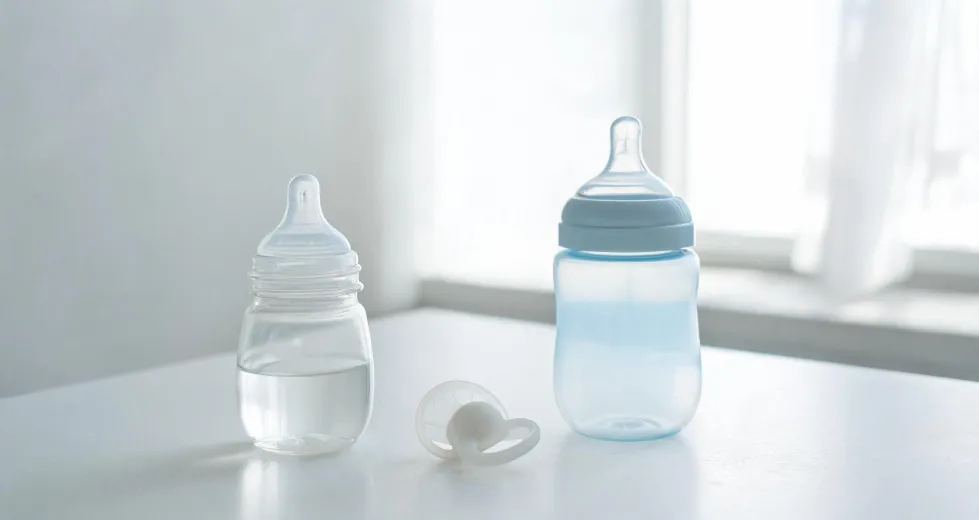
At 6:45 on a Tuesday morning, Sarah lifted the warmed bottle from its water bath and turned toward the crib. The NUK Perfect Match bottle was the one her sister had recommended after weeks of debate, an 8-ounce bottle with a medium-flow nipple that looked soft and pliable. She had read on the NUK website that the design aligns with how babies naturally feed and soothe, and that the brand ranks first in hospitals. That reassurance had guided her choice, along with the promise that the shape would mimic breastfeeding. But when she placed the nipple against her daughter's lips, Chloe turned her head and let out a sharp cry. Milk dribbled down the baby's chin as she pushed the bottle away with both tiny hands. Sarah's chest tightened. In two weeks she would be back at her desk, and during the day this bottle would be her daughter's only source of milk. If it did not work, the plan would collapse. She lifted Chloe to her shoulder, patting her back, while her mind raced through possible causes: Was the flow too fast? Too slow? Was the nipple shape unfamiliar? Was the baby confused because the bottle felt nothing like the breast? She remembered a pediatric nurse once saying that babies are sensitive to flow and texture. Sarah looked at the package again: Medium Flow for babies around 3 months and older. Chloe was 6 months old, so theoretically it was right. But the evidence on the kitchen counter suggested otherwise.
When the Baby Pushes the Bottle Away
At 6:45 on a Tuesday morning, Sarah lifted the warmed bottle from its water bath and turned toward the crib. The NUK Perfect Match bottle was the one her sister had recommended after weeks of debate, an 8-ounce bottle with a medium-flow nipple that looked soft and pliable. She had read on the NUK website that the design aligns with how babies naturally feed and soothe, and that the brand ranks first in hospitals. That reassurance had guided her choice, along with the promise that the shape would mimic breastfeeding. But when she placed the nipple against her daughter's lips, Chloe turned her head and let out a sharp cry. Milk dribbled down the baby's chin as she pushed the bottle away with both tiny hands. Sarah's chest tightened. In two weeks she would be back at her desk, and during the day this bottle would be her daughter's only source of milk. If it did not work, the plan would collapse. She lifted Chloe to her shoulder, patting her back, while her mind raced through possible causes: Was the flow too fast? Too slow? Was the nipple shape unfamiliar? Was the baby confused because the bottle felt nothing like the breast? She remembered a pediatric nurse once saying that babies are sensitive to flow and texture. Sarah looked at the package again: Medium Flow for babies around 3 months and older. Chloe was 6 months old, so theoretically it was right. But the evidence on the kitchen counter suggested otherwise.
Why would a baby who breastfeeds perfectly reject a bottle that has been designed to mimic nature? Is the medium flow actually too aggressive for a six-month-old who has only taken milk from the breast? Or is it the shape of the nipple, which feels harder and longer than the familiar areola? These are the questions that run through a parent's mind when the first bottle trial fails. The scene repeats in kitchens across the country: a mother returns to work, a father tries to calm a crying infant, and a bottle gets pushed away. Frustration builds because the packaging promised a solution, not another puzzle. The real answer rarely lies in the brand or the price; it lies in how the baby behaves during the first few minutes of feeding. Is she sucking actively or passively? Does she gulp and then pause? Does milk leak from the corners of her mouth? These small clues separate a mismatch from a simple adjustment. Until those observations are made, the bottle will remain a foreign object, no matter how many awards it has won.
Natural Feeding and Hygiene: Two Non-Negotiables
To understand why Chloe refuses the bottle, it helps to step back and consider how breastfeeding works. When a baby latches onto her mother's breast, she uses a combination of suction and tongue movement to draw milk in rhythmic bursts. The nipple is drawn to the back of the mouth, and the baby's jaw massages the areola. A bottle that claims to support natural feeding must respect this pattern. NUK's Perfect Match line, which includes the breastfeeding set and the learner cup, is built around the idea that a baby's feeding habits should not have to change radically when a bottle replaces the breast. The website describes the products as adapting to how a baby naturally feeds and soothes, and the line exists alongside soothers and other feeding accessories. The condition for success, therefore, is not simply that the bottle holds milk—it must allow the same tongue and jaw movements that the baby has already learned. If the nipple is too firm, too long, or the flow too fast, the baby's natural rhythm is disrupted, and she will fight the bottle. This is the first lens through which Sarah must evaluate her choice.
But even a perfectly shaped nipple means nothing if the bottle is not cleaned properly. In March 2025, the CDC updated its guidance on cleaning, sanitizing, and storing infant feeding items. The key points are simple: clean bottles and all their parts daily, and sanitize them daily for extra germ removal if the baby is under 2 months old, was born prematurely, or has a weakened immune system. The CDC page, dated March 19, 2025, emphasizes that feeding items include bottles, nipples, rings, caps, valves, and membranes. This guidance exists because bacteria can hide in tiny crevices and contaminate the milk, leading to serious infections. For Sarah, who is already stretched thin, the cleaning routine is an extra chore, but it is non-negotiable. A medium-flow nipple has small holes that are hard to see, and leftover milk can dry and clog them. More importantly, the warmth of milk creates a breeding ground for bacteria. So hygiene becomes the second lens: no matter how well the bottle works, if it is not cleaned and sanitized correctly, it is not safe. This is not a detail to skip; it is a foundation.
Flow and Material: How to Compare Without Getting Trapped
When comparing bottles, the biggest trap is looking only at capacity and material while ignoring the flow rate. Bottle brands do not share one universal standard for medium. A medium-flow from one brand might deliver twice as much milk per minute as another's. The age range printed on the package is a rough guide, but it cannot predict how a particular baby will handle the flow. The condition that matters is the baby's suck-swallow-breath coordination. A six-month-old who has been breastfeeding may have a stronger suck than a formula-fed baby of the same age, but that does not guarantee she can manage a faster flow. The only way to know is to observe: if the baby seems frustrated and drains the bottle too quickly, the flow is too high; if she pauses often, loses interest, or the level barely drops, the flow is too low. These behaviors, not the label, should dictate the choice. This is the comparison framework that Sarah needs before she can judge any brand.
With that framework in mind, NUK's claim to be Nr. 1 in hospital takes on a different meaning. Hospitals are not swayed by marketing; they choose products that work under stress, for fragile infants, and for mothers who are still learning. A bottle that ranks first in hospitals has likely been tested across many babies with different needs. Combined with the brand's stated philosophy of adapting to baby's natural way of feeding and soothing, NUK positions itself as the bottle that respects the breastfeeding pattern. That is not to say every NUK bottle is perfect for every baby—only that the design starts with a strong hypothesis: the bottle should feel as close to the breast as possible. When Sarah compares flow rates among brands, she should ask whether the nipple shape matches her baby's oral anatomy and whether the flow documentation is tied to observed behavior rather than arbitrary months. This is how she can avoid the trap of buying another bottle that ends up in a drawer.
Why Choose the NUK Perfect Match Medium Flow?
So should Sarah pick the NUK Perfect Match Medium Flow 8-ounce bottle for Chloe? The question feels urgent because her maternity leave is ending, and every failed bottle session adds to her worry. She does not need a bottle that wins awards; she needs one that Chloe will accept, one that does not cause choking or spit-up, and one that can be cleaned in a few minutes. The 8-ounce size is appropriate for a baby who is already taking solid food, but the medium flow rate is a middle ground: fast enough to satisfy a hungry baby, slow enough to prevent gulping. However, the label alone cannot confirm compatibility. Sarah must consider her daughter's current sucking behavior and how it has changed over the past weeks.
The choice becomes clearer when the conditions are met: Chloe is 6 months old, she is already breastfeeding well, and she has started solid foods. At this stage, her swallowing coordination is stronger, but she still needs a nipple that allows her to control the pace. The NUK Perfect Match line includes the breastfeeding set and soothers, which suggests a coordinated design across products. More importantly, the brand's hospital ranking and its emphasis on natural feeding give Sarah a reason to believe the medium-flow nipple will not be a wild departure from what Chloe knows. The condition is that Sarah should observe Chloe's first three to five bottle sessions. If she sees rhythmic sucking, no more than a few drops leaking, and a calm finish, the choice is validated. If she sees coughing or milk spilling, she should step down to a slow flow, regardless of what the package says. This is the decision rule that turns a guess into a calculation.
After One Week: From Rejection to Acceptance
One week later, Sarah looks back at that tense Tuesday morning. The first two days were rough; Chloe would take the bottle only when Sarah held her in exactly the same position as she would for breastfeeding. By day three, Chloe began to suck more rhythmically, and by day five, she finished a full 8-ounce bottle in fifteen minutes without crying. What changed? Sarah did not abandon the NUK bottle; she simply paid closer attention to flow. She noticed that Chloe would occasionally pull off the nipple and let the milk pool in her mouth, which was a sign that the medium flow was slightly generous. She then tilted the bottle so the nipple stayed full but let Chloe pause actively. The NUK website's product catalog, which lists the Perfect Match line alongside soothers and learner cups, reinforced the idea that the company thinks about the whole developmental arc. The baby was not just getting milk; she was learning to accept a new source of comfort.
The final rule that Sarah now applies is simple: judge the flow by the baby, not by the label. If Chloe is pulling away, gulping, or scraping her gums, that is a signal. If she is working hard but not getting enough, that is another signal. There is no universal medium that suits all babies at the same age. The other non-negotiable is cleaning: every part must be washed after each use and sanitized daily while the baby is under 6 months old, as recommended by the CDC. Sarah now keeps two sets of bottles so one can dry completely while the other is in use. On the last morning before returning to work, she fills a bottle with pumped milk, and Chloe reaches for it. The scene that once filled her with dread is now just another routine: the soft click of the nipple ring, the quiet rhythm of swallowing, and the steady weight of a contented baby in her arms.
On the last morning before her return to work, Sarah filled a bottle without hesitation. Chloe reached for it, and the familiar rhythm began — the soft click, the steady swallow, and the warmth of a baby who had stopped fighting the bottle. The week that started with tears ended with a simple, quiet trust. That trust, Sarah learned, was built not by the label on the package but by attention to every small cue and every clean part.

Miriam Adler
Miriam Adler is an educational and STEM toy analyst specializing in busy boards, Montessori-style manipulatives, learning towers, sound books, reading pens, pretend-play sets, and early learning toys. She applies ASTM F963 and IEC 62115 methods while evaluating small-part hazards, accessible edges, switch durability, sound output, battery access, pull force, and age-appropriate task complexity. Her work helps parents, retailers, and product teams choose learning products that align developmental goals, supervision needs, interaction design, and the intended age stage.
Leave a Reply