Should You Buy the NUK First Choice 90ml Bottle for Your Newborn?
-
Match the 90ml to the newborn feeding stage
-
NUK builds its bottle range around natural newborn feeding
-
Size the bottle to the feed volume, not to the urge to buy bigger
-
Plan the daily clean-and-sanitize routine before you choose a bottle
-
Read NUK First Choice reviews as a stage filter, not a scoreboard
-
The verdict: trust the stage, the size, and the hygiene plan
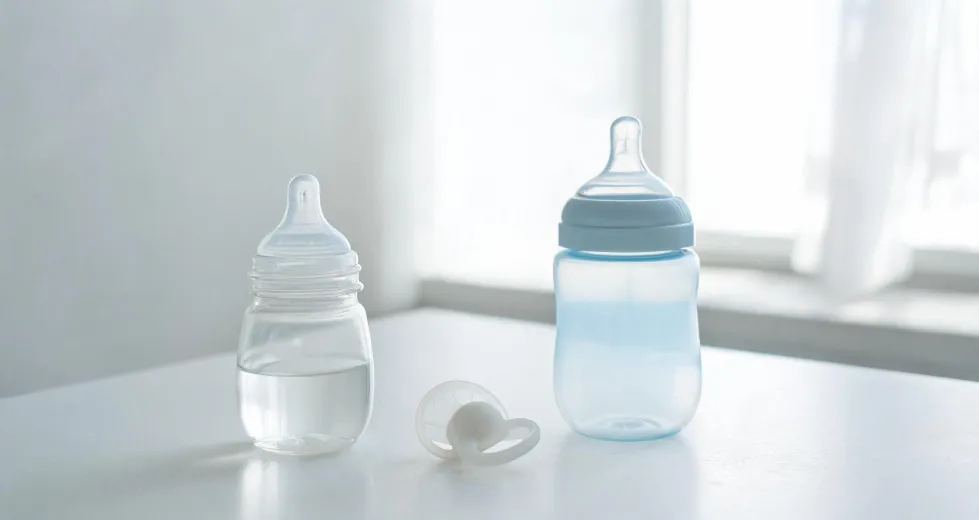
Should you buy the NUK First Choice 90ml bottle for your newborn? Yes, if your baby's feeds are still at or below 90 ml and you can commit to sanitizing the parts daily. For a newborn in the 0–6 months stage, this compact bottle matches the typical feed volume, and NUK's own stage-based lineup places it in the right feeding tier. The deciding factor is not the star rating but your hygiene plan: CDC guidance says to sanitize feeding items daily for babies under 3 months, and the 90 ml size is easier to keep on top of that routine. Keep reading to learn when to size up and how to judge reviews without getting misled.
Match the 90ml to the newborn feeding stage
Here is the direct answer: the NUK First Choice 90ml is a sound first bottle for a newborn, provided two conditions hold. First, your baby's feeds are still at or below 90 ml — which is typical in the early weeks, when feed volumes are small and frequent. Second, you are ready to follow the CDC hygiene routine for infants under 3 months: clean all feeding items after every use and sanitize them at least once daily. If those conditions fit, the 90 ml bottle is not just adequate — it is the right size, because it matches the newborn feeding stage and makes the daily sanitizing workload lighter. And it sits in NUK's 0–6 months stage lineup, which we'll detail next.
What does 'newborn' mean in this guide? We are talking about a baby in the 0–6 months stage, before the transition to solids and before feed volumes push past 90 ml. NUK's own website groups its guidance by developmental stages — pregnancy, 0–6 months, 6–18 months, and 18+ months — and the 0–6 months bucket is where the newborn bottle belongs. In this stage, a feed commonly ranges from about 60 ml to 90 ml, which is why a 90 ml bottle is not a compromise; it is the calibrated size for the moment. This review focuses on the NUK First Choice 90ml for a newborn, not for a 6-month-old gulping 180 ml.
So what should this guide prove? We'll answer four questions: what NUK builds around newborn feeding, whether 90 ml is the right size against bigger bottles, what cleaning and sanitizing routine makes a newborn bottle safe, and how to read reviews without being misled by star counts. The chain runs from brand positioning to size logic to hygiene to review literacy, and it ends with a reusable verdict. If you read only one section, make it hygiene — that's the step that turns a good bottle into a safe one. Each question builds on the last, so you'll finish with a decision rule, not a vague opinion.
NUK builds its bottle range around natural newborn feeding
Why does NUK's brand philosophy matter for a bottle purchase? Because it tells you what the company is designing toward. NUK's official positioning is that its products adapt to a baby's natural way of feeding and soothing — a phrase on its own site that frames the First Choice line. The bottle is shaped around the mechanics of how babies suck and swallow, rather than around a generic feeding device. For a newborn, that positioning is relevant: the nipple, venting, and bottle shape work with the baby's instinctive feeding motion. It's not clinical proof of safety, but a signal that the design intent matches the newborn stage. That positioning also explains the 90 ml size: it's part of the stage-based design, not an afterthought.
NUK organizes its entire feeding range by developmental stage, which eases placing the 90 ml. On the brand's site, stages are pregnancy, 0–6 months, 6–18 months, and 18+ months, each with its own bundle of products and guidance. The 0–6 months stage is described as the beginning of baby development, where newborn milestones happen — and the First Choice newborn bottle sits there. So NUK itself expects the 90 ml to be used during the newborn phase, not as a long-term all-purpose bottle. When you see the 90 ml listed for 0–6 months, read it as the manufacturer's intended use window — a stronger signal than any generic 'all ages' claim.
What about the 'nr. 1 in hospital' claim in NUK's materials? It's a heritage signal, not clinical endorsement. NUK says 'nr. 1 in hospital' on its own pages, and that phrase is part of the brand's story — the company is established in healthcare settings. But for a buying decision, treat it as marketing, not as proof that the 90 ml bottle is medically superior. What matters is the same for every product: does the bottle fit the baby's stage, and can your household follow the CDC's sanitizing routine? The hospital claim might lean you toward NUK, but it doesn't replace the safety layer you control at home.
Size the bottle to the feed volume, not to the urge to buy bigger
Now the size question: is 90 ml too small? Not for a newborn — the reason is the feeding stage, not the bottle. The right bottle size matches the current feed volume without excess headspace that traps air. For a newborn taking 60–90 ml per feed, a 90 ml bottle holds exactly one feed with room to spare. Using a 150 ml or 240 ml bottle means more air inside, which can cause gas and make overfeeding easier. NUK's stage-based range — the same system that places the bottle in 0–6 months — works as a selection filter: if the product is marketed for your stage, the size is designed for that stage.
How do you match bottle size to feeding stage? The rule is simple: choose the size that holds your baby's largest typical feed, and size up only when that feed consistently exceeds capacity. For a newborn, the typical feed is 60–90 ml, so a 90 ml bottle fits. Around 2 months, feeds may climb past 90 ml; when they do, switch to 150 ml. From 6 months, as solids take over, a 180 ml or 240 ml bottle becomes the workhorse. The pattern isn't about star ratings — it's about the stage. Here is the decision framework: if feed volume is at or below capacity, the bottle is right; if it's consistently above, size up.
When exactly should you move to a bigger bottle? The condition is behavioral: your baby consistently drains the full 90 ml and still seems hungry, or feed volume naturally increases to 120 ml or more. That usually happens as the newborn stage progresses — by 2 months, many babies take more than 90 ml per feed, and by 6 months, the 0–6 months stage gives way to the next. NUK's own stage guidance marks 6 months as a transition point, where feeding patterns change and larger bottles become appropriate. Buying the 90 ml now doesn't mean buying twice; it means buying the right tool for the current stage, and the next purchase will be driven by your baby's actual appetite, not by a guess.
Plan the daily clean-and-sanitize routine before you choose a bottle
Why does hygiene become the deciding factor for a newborn bottle? Because the stakes are higher than size. In August 2017, the CDC released new breast pump cleaning guidelines after a reported infant death linked to improperly cleaned pump parts; the infection came from bacteria that can live in a kitchen sink. The message isn't that every baby will get sick — it's that babies under 6 months have less robust immune systems and can't handle common kitchen bacteria like older children. So 'which bottle is best' is really a question about your cleaning plan: if you can't commit to cleaning and sanitizing feeding items daily, no bottle is truly safe for a newborn, regardless of brand.
What exactly does the CDC require? The agency says to clean infant feeding items daily and sanitize them for extra germ removal — and to sanitize daily when the baby is younger than 3 months, born premature, or has a weakened immune system. The 90 ml bottle, with fewer parts, makes that routine shorter: wash the bottle, nipple, collar, and cap after every feed, then sanitize once a day. Some CDC pages mention under 2 months as the threshold, but the stricter reading — under 3 months — is the one NUK-based guides and many pediatric sources use for newborns. The rule doesn't depend on which bottle you choose; it depends on the baby's age and health.
An effective sanitizing routine looks like this. A joint working group of infection-prevention professionals published guidance for decontaminating feeding items at home and in hospital, and the steps are straightforward. Start by disassembling the bottle into its parts, rinse with cold water, then wash in hot, soapy water — or in the dishwasher — to remove milk residue. After washing, sanitize using a steam sterilizer, boiling water, or a microwave sterilizer bag, following the product's instructions. The sterilizer kills residual germs that survive washing, and that daily sanitizing step is what the CDC advises for babies under 3 months. The practical point is that a small 90 ml bottle with minimal parts is faster to disassemble, wash, and sterilize than a larger bottle with valves or membranes.
Read NUK First Choice reviews as a stage filter, not a scoreboard
How much weight should you put on NUK First Choice reviews? It depends on how they were produced. The most reliable reviews are based on hands-on testing with a clear methodology — the kind that says testers bought the products themselves and received no freebies. That's the standard used by the senior review editor cited in this guide's source material: 'We buy all the products we test — no freebies from companies.' When a review is built on that foundation, opinions about nipple flow, ease of cleaning, and leaks are based on actual use, not marketing. Reviews without a disclosed methodology — especially ones that read like ads or include unverified claims — deserve much less weight.
What signals do you extract from a review? Look for three things: nipple flow pace for a newborn, venting to reduce gas, and the number of parts to wash and sanitize daily. Those signals line up with the CDC hygiene routine and the 0–6 months stage. Ignore the raw star count — a 4.5-star average tells you nothing about fit for your baby's feed volume. Instead, read one- and two-star reviews for repeated failures like 'nipple collapses' or 'hard to clean'; those details matter for daily use. A review that mentions 'stage appropriate' or 'matches my newborn's 90 ml feeds' is more useful than 'great bottle'.
The final check before buying is positioning: does the bottle's intended use match your newborn's stage? You can apply the same filter NUK uses — its stage-based range — by asking whether the NUK First Choice 90ml is marketed for the 0–6 months stage. If it is, the size and nipple flow are designed for a newborn's feeding patterns, not for a 6-month-old who drinks 180 ml. This filter also helps you ignore brand noise: a bottle positioned as 'all ages' may not suit a newborn. When the product's stage mapping and your family's hygiene plan line up with the CDC daily sanitizing rule, you have what matters — regardless of whether the review score is 4.5 or 4.8.
The verdict: trust the stage, the size, and the hygiene plan
So what is the verdict? For newborns whose feeds stay at or below 90 ml, the NUK First Choice 90ml is a sound first-bottle choice — provided you commit to the daily clean-and-sanitize routine that CDC guidance requires for babies under 3 months. The 90 ml size matches the newborn feeding stage, the bottle belongs to NUK's 0–6 months product family, and fewer parts make the daily hygiene workload lighter. The bigger-bottle temptation — buying a 150 ml or 240 ml now to 'save money' — misses the point: a large bottle adds air, encourages overfeeding, and makes sanitation harder at the stage when it matters most. The decision isn't about star counts; it's about the match between stage, size, and your hygiene plan.
The rule to reuse for your next bottle decision is a three-part test. First, confirm the baby's current feed volume and pick a bottle that holds it without excessive headspace. Second, check the product's stage mapping — is it positioned for your baby's age range? Third, build the hygiene routine first, because CDC guidance says to sanitize daily for babies under 3 months, and adjust the bottle choice to fit that routine. When any part fails — feed volume grows past capacity, the product moves to a different stage, or daily sanitizing becomes unsustainable — it's time to change the bottle. This test works for NUK First Choice now and for any other bottle later.
The 90 ml bottle may feel small on the counter, but small is the point for the first weeks. The compact size matches the feed, keeps the sanitizing routine manageable, and leaves a clear signal — a consistently drained bottle — for when it's time to move to the next stage. When that day comes, you'll know the rule: size follows feed volume, stage mapping, and hygiene plan. That's the verdict and the rule in one: trust the stage, not the hype. The proof is in the routine, not in the review.
The NUK First Choice 90ml earns its place in the newborn stage when the feed volume matches, the hygiene plan is real, and the reviews are read as signals, not scores.

Miriam Adler
Miriam Adler is an educational and STEM toy analyst specializing in busy boards, Montessori-style manipulatives, learning towers, sound books, reading pens, pretend-play sets, and early learning toys. She applies ASTM F963 and IEC 62115 methods while evaluating small-part hazards, accessible edges, switch durability, sound output, battery access, pull force, and age-appropriate task complexity. Her work helps parents, retailers, and product teams choose learning products that align developmental goals, supervision needs, interaction design, and the intended age stage.
Leave a Reply