NUK Space Glow-in-the-Dark Orthodontic Pacifier: Design, Night Visibility, and Care
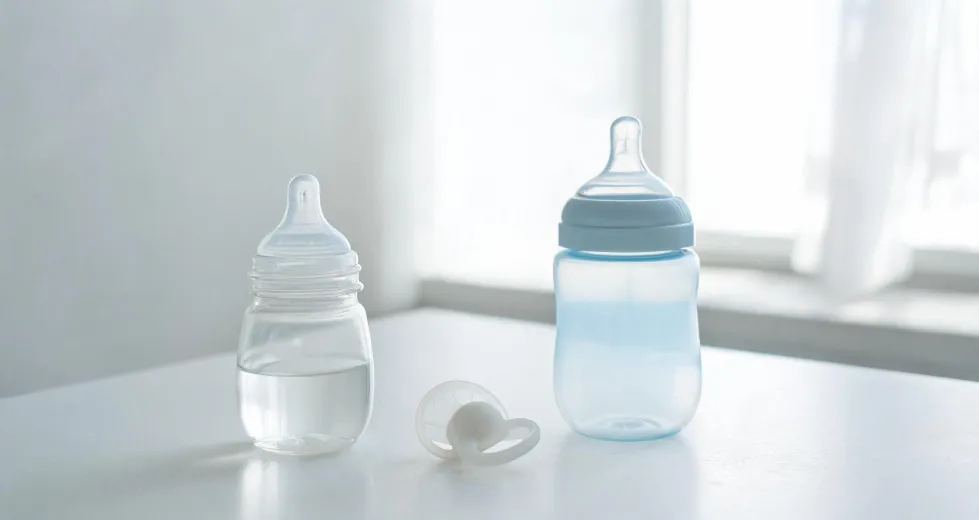
Should you replace the pacifier your baby already likes with a glow-in-the-dark orthodontic one from NUK Space? The direct answer is yes, but only when you evaluate the orthodontic shape, the night-time visibility, and the daily cleaning routine as a single package. The orthodontic design follows the natural tongue and palate positions of breastfeeding, which supports healthy oral development; the glow lets you find the pacifier in the dark without switching on a lamp, so you avoid the bright light that can wake a drowsy baby further. And because the pacifier goes into your baby's mouth many times a day, the CDC's guidance on cleaning feeding items turns hygiene from a choice into a responsibility. If you can meet that care standard, the NUK Space line brings together these three dimensions in a way a plain pacifier does not. The sections below show what each dimension does, when it matters, and how to make the final call.
Three Factors Decide Whether This Pacifier Works
What exactly makes a pacifier worth choosing over the one already in your baby's mouth? The answer comes down to three interconnected factors: the orthodontic shape, the night-time glow, and the way you will clean it. Each factor solves a specific problem, and together they determine whether the switch will help or just add cost. The orthodontic shape addresses oral development over the long term, the glow addresses the middle-of-the-night search that can disrupt sleep, and the cleaning rule addresses the everyday safety that keeps germs away. When you look at any pacifier, you should ask: does it fit the way your baby naturally sucks, can you reach it in the dark without breaking sleep, and can you wash it thoroughly without a hassle? Those three questions turn a simple purchase into a decision that affects sleep, oral health, and infection prevention.
To understand why these three factors matter, start with the brand behind them. NUK describes itself as the number one in hospital, a claim that signals its products are chosen by professionals who cannot afford trial and error. More importantly, NUK states that its products adapt to a baby's natural way of feeding and soothing. That philosophy means the company designs pacifiers around the mechanics of sucking, not around a shape that simply looks nice. When a brand used in hospitals also publishes content about supporting babies from pregnancy through 18 months and beyond, it is telling you that its pacifiers are expected to meet real developmental needs. This is why you should not dismiss the orthodontic or glow features as marketing: they come from a design language that has been tested in clinical settings where parents are not the only ones watching.
But the value of these features depends on a condition: your baby's age and stage. NUK groups its guidance into pregnancy, 0-6 months, 6-18 months, and 18+ months, because every stage has a different set of needs. A newborn who is still learning to latch benefits from a pacifier that mimics the breast shape, while an older baby who is exploring may need a different style for teething or self-soothing. This is the condition that keeps the decision honest: a glow-in-the-dark orthodontic pacifier is not universally right for every baby. If your child is already outside the 0-18 month window, or if you have not noticed any night-waking issues, the extra cost of the glow may not be justified. The design features only become valuable when they match the phase your baby is in right now.
The Orthodontic Shape Supports Natural Sucking
The term 'orthodontic' can sound clinical, but the mechanism is simple to explain. When a baby breastfeeds, the tongue moves in a wave-like pattern and the palate is gently shaped by that motion. NUK designs its pacifiers to mirror that natural motion, so the nipple of an orthodontic pacifier is flattened and bulbous in a way that allows the tongue to sit in its natural position. This reduces the pressure on the gums and teeth that a round, conventional pacifier can cause. Because the shape follows the natural sucking motion, it supports oral development rather than pushing the teeth outward or causing misalignment. That is the cause-and-effect chain: the pacifier matches the mouth's natural mechanics, and the result is less interference with the developing jaw.
That support only works if you follow the replacement rule. Orthodontic pacifiers are not designed to be used indefinitely, and the material ages just like any other silicone or latex item. Most manufacturers recommend replacing a pacifier every 6 to 8 weeks, even if it still looks intact, because heat, saliva, and wear can break down the surface. The condition applies to NUK Space just as it does to every pacifier: if the silicone starts to stick, tear, or become discolored, you must switch it out immediately. Using an old pacifier beyond its safe window removes the orthodontic benefit and adds a hygiene risk. So the design that protects oral development also depends on you being willing to refresh it regularly.
The need for different shapes becomes clear as your baby grows. NUK's own content describes the 6 months old baby onwards as a stage of exploration, when first teeth, determined crawls, and wobbly steps change the game. At that point, a pacifier that was perfect for a newborn may no longer fit the way your baby sucks, and the force of teeth can distort a soft nipple. NUK also emphasizes that it supports every stage of development, which is why the company makes different pacifiers for different ages. This is the explanation for why a single 'orthodontic' label is not enough: the shape has to match the current stage, and the stage-based design is what keeps the orthodontic benefit alive as your baby changes.
Why the Glow Helps at Night
Is the glow just a gimmick that makes the pacifier look futuristic in the package? After all, a baby will not care what the pacifier looks like in the dark, and parents can simply turn on a bedside lamp. But that logic misses a key point about sleep: light is a powerful cue for wakefulness. When you turn on a lamp at 2 a.m. to find a pacifier, your baby's brain registers that brightness, even if they are only half awake. The result can be a longer wake period, a harder time falling back asleep, and a more fragmented night for both of you. This question — does the glow serve a real purpose — deserves a closer look before you write it off.
The glow solves the problem exactly where it happens. When you can see the pacifier by its soft glow, you do not need to flip on the light; you can reach into the crib with your hand already at the right spot, keep the room dark, and return the pacifier with minimal disturbance. This fits the brand's focus on natural feeding, because a night feed or a comfort suck should not come with a burst of bright light that wakes the brain. The mechanism is straightforward: less artificial light around your baby means the sleep pressure stays high, and the pacifier can be reinserted in seconds. That is the practical value of the glow: it reduces the very stimulus that turns a brief night waking into a longer one.
The glow is most useful in a specific condition: when your baby regularly loses the pacifier during the night and calls out for it. If your baby sleeps through the night or can find the pacifier on their own, the glow adds little. The condition also depends on the sleep environment: if you already use a dim red nightlight, you may not need the glow. But for parents in a dark room with a baby who wakes often, the glow shortens the time between the first cry and the pacifier being back in the mouth, which can make the difference between a five-minute settling and a thirty-minute rally. It is not a cure for sleep problems, but it is a tool that removes one avoidable disruption.
Clean and Replace It on a Schedule
Every pacifier is a feeding item, and feeding items have a hygiene baseline that you cannot ignore. The U.S. Centers for Disease Control and Prevention (CDC) states that infant feeding items include bottles, nipples, rings, caps, and other items that touch milk or saliva, and it directs parents to clean these items daily. For babies younger than 2 months, or those who were born premature or have a weakened immune system, the CDC recommends sanitizing daily. This is the condition that turns cleaning from an optional duty into a medical one: if you choose a pacifier, you are choosing to follow this schedule. The good news is that the NUK Space model, with its simple silicone surface, can be washed with hot soapy water and sterilized according to the same rules as any high-quality pacifier.
The frequency is not a suggestion; it is tied to reducing germs. The CDC explicitly says that, for extra germ removal, you should sanitize feeding items at least once daily, and that this is particularly important when your baby is younger than 3 months, born prematurely, or has a weakened immune system. Many parents are surprised to learn that sanitizing is not only for the first few weeks. In fact, the CDC's updated guidance from March 2025 repeats the same core point: clean items daily, and sanitize daily under those conditions. This is why a pacifier with hard-to-reach crevices, awkward shapes, or glued parts is a poor choice; it gives germs a place to hide. The NUK Space, with its smooth shield and simple one-piece silicone, makes it practical to do this daily routine without a struggle.
The science behind this advice goes beyond policy. A peer-reviewed guidance document from the Healthcare Infection Society and the Infection Prevention Society, published in 2015, lays out detailed cleaning and decontamination steps for feeding kits, explaining that residual milk or saliva can support bacterial growth if not removed. The point is that even a visually clean pacifier can carry biofilm if you skip the daily wash, and that risk increases when the pacifier is shared or stored damp. This is why the CDC's rule is not a burden but a protective floor. When you choose a pacifier, you are not just choosing a shape and a color; you are choosing how easily you can meet that floor. If a pacifier cannot be taken apart and cleaned quickly, you will eventually skip a step, and that is where the hygiene risk creeps back in.
So here is the verdict. The NUK Space glow-in-the-dark orthodontic pacifier is worth switching to when your baby is still in the 0-18 month range, you are the one who fumbles in the dark during night wakings, and you can commit to the CDC's daily cleaning and sanitizing rule for a baby under 2 months. The orthodontic shape supports natural sucking, the glow removes a light-based sleep disruption, and the simple surfaces make hygiene manageable. If those conditions do not match — if your baby no longer needs a pacifier, if your room is already lit softly, or if you cannot keep up with the cleaning schedule — then a standard orthodontic pacifier you already trust is perfectly adequate. The decision is not about what is trendy; it is about what works for your baby's mouth, your nights, and your ability to care.

Miriam Adler
Miriam Adler is an educational and STEM toy analyst specializing in busy boards, Montessori-style manipulatives, learning towers, sound books, reading pens, pretend-play sets, and early learning toys. She applies ASTM F963 and IEC 62115 methods while evaluating small-part hazards, accessible edges, switch durability, sound output, battery access, pull force, and age-appropriate task complexity. Her work helps parents, retailers, and product teams choose learning products that align developmental goals, supervision needs, interaction design, and the intended age stage.
Leave a Reply