Dr. Brown's Bottles and the Baby Brezza: The Once-Daily Sanitizing Rule
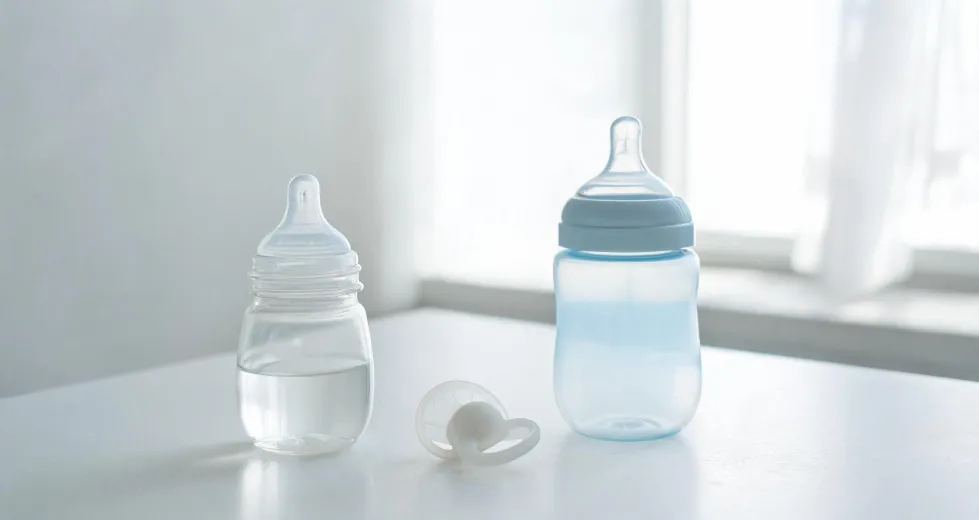
It's the same question every parent with a counter full of Dr. Brown's bottles ends up asking: do I need to sterilize the whole batch after every feeding, or can I get away with a single evening cycle? Two routines compete for your attention. One says every bottle, every feeding, every time, no exceptions. The other says wash thoroughly, sanitize once a day, and let the machine do its job. The stakes feel high—this is feeding equipment for a newborn, after all, and no one wants to be the parent who cuts a corner. But the decision isn't really about brand compatibility or which sterilizer you own. It's about frequency, and about what the evidence actually supports. You've probably seen both sides argued in parenting forums: the parent who runs the sterilizer after every bottle insists it's the only safe way, while the parent who does an evening load swears it's more than enough. Both can't be right, and the gap between them is costing you time, money, and maybe a little sleep.
Do you really need to sterilize after every feeding?
Picture a kitchen counter covered in Dr. Brown's bottles—collars, nipples, and the little vent inserts scattered around after a long day of feeding. Every parent reaches a moment when they wonder: does the whole batch need another sterilization cycle right now, or can it wait until evening? Two routines are fighting for your attention. One camp insists on sterilizing after every feeding, no exceptions. The other says wash thoroughly, run the sterilizer once daily, and trust the machine. The stakes feel high, because this is equipment that touches a newborn's food, and nobody wants to be the parent who skipped a step. But the real fork in the road isn't about which sterilizer you own—it's about how often you use it, and what the evidence actually supports. In parenting forums you'll see both sides: the parent who runs the sterilizer after every bottle says it's the only safe way; the parent who does a single evening load says it's plenty. Both can't be right, and the gap between them costs you time, money, and sleep.
The choice matters for three reasons. First, time: sterilization cycles eat up a meaningful chunk of your day, and if you're already washing bottles every few hours, adding a cycle after each feeding turns your kitchen into a nonstop assembly line. Second, part wear: repeated high-heat exposure degrades silicone nipples and plastic vent inserts faster, which means replacing parts more often and spending more money. Third, safety: get the frequency wrong in either direction and you're either over-sterilizing for no benefit or under-protecting a vulnerable baby. And because Dr. Brown's bottles come with multiple small pieces—the collar, the nipple, the vent insert—every extra sanitizing cycle is extra time spent handling fiddly parts that can easily get lost or damaged. The good news is that you don't have to choose between exhaustion and guilt. The guidance from the CDC draws a clear line, and it's more reasonable than most parents expect. Once you see the actual baseline, the decision stops being a constant worry and becomes a simple routine you can repeat without second-guessing yourself.
What the CDC-based guidance actually says
So what does the authority actually say? The CDC's cleaning guidance for feeding items is straightforward: 'For extra germ removal, sanitize feeding items at least once daily.' That's the baseline. The same guidance adds that sanitizing is particularly important when your baby is younger than 3 months, was born prematurely, or has a weakened immune system. In other words, the floor is once a day, not once a feeding. This directly contradicts the all-day sterilization routine that many parents assume is mandatory. The evidence doesn't say 'every single bottle after every single feed'; it says 'at least once daily.' That distinction is the whole game. Instead of wondering whether you missed a step after a 2 a.m. feeding, you can point to a clear rule that covers your baby's highest-risk period and tapers off naturally as they grow. The wording matters: 'at least' sets a minimum, not an ideal frequency to exceed, and it comes from the same agency that tracks pediatric infections.
The once-daily guidance didn't come out of nowhere. In August 2017, the CDC released a report about the death of a baby caused by a rare but serious infection that was traced back to improperly cleaned breast pump parts. That report prompted the CDC to review widely held pumping standards, and the organization didn't like what it found. The result was a new set of cleaning guidelines that emphasized daily sanitizing as the effective floor. The updated guidelines, published in August 2017 and updated later that month, were the first time the agency made 'once daily' an explicit recommendation rather than a general suggestion. So the reason once-daily is enough—not every-session—isn't laziness; it's that the evidence for extra germ removal shows that a thorough wash plus a daily sanitize is sufficient for healthy-term babies. The 'every single feeding' standard is a plausible but wrong reading. It wastes time, wears out parts, and doesn't meaningfully reduce risk beyond the daily baseline. Understanding that origin story matters: it connects the rule to a real, tragic event, which is why the CDC made the language concrete rather than vague.
A real-world Baby Brezza evening routine
What does once-daily look like in a real kitchen? One parent on Reddit described a simple evening rhythm: 'We have a Baby Brezza sterilizer that I usually run in the evening with bottles and pump parts after I wash with Dapple pump parts soap.' That's it. No rolling boil at 2 a.m. No microwave bags between every feed. Just a wash, a load into the sterilizer, and a cycle before bed. The same thread mentions boiling water as an alternative—'you can boil water and then leave in for ~3 minutes'—but the practical takeaway is that a once-daily machine cycle fits into a normal day. The parent's routine works because it sequences the steps: wash first, sterilize once, then let the parts dry. And because that parent has a Baby Brezza, the drying function is part of the deal—the steam cycle is followed by a hot-air dry, so the parts come out ready to reassemble.
The sequence matters more than the machine. Wash promptly after use—soap and warm water break down milk residue before it hardens. Load everything into the Baby Brezza and run the evening cycle; the steam reaches the nooks and crannies a brush can't. Then let the drying cycle run or leave the parts on a clean rack overnight. The reason this works is that moisture is what lets germs resettle. A sterilizer that dries is better than one that just steams, because it removes the damp environment that bacteria love. And for Dr. Brown's bottles specifically, the vents need special attention: they're narrow and hard to dry, so a cycle that includes a thorough dry phase is ideal. If you're using a boiling or microwave method, you'll need to shake off excess water and arrange the parts on a clean towel so air can reach every surface. Skipping the dry step is the easiest way to undo all the good the sanitizing did. Think of drying as the second half of the sanitizing job.
The decision rule: match sanitation to baby's age and your time
Now the rule, and it's simple. If your baby is younger than 3 months, was born prematurely, or has a weakened immune system, sanitize feeding items at least once a day—that's the CDC's floor, stated in its cleaning guidance. For older, healthy babies, a thorough wash with hot soapy water is enough, and you can reserve the sterilizer for weekly deep cleans or after an illness. The once-daily standard is not a minimum you should exceed without reason; it's the evidence-backed sweet spot. This rule turns the frequency question into a checklist: Is my baby in the high-risk group? Then yes, daily sanitize. Otherwise, wash and dry well, and you're done. The phrase 'at least once a day' appears in the CDC's materials as the specific step for extra germ removal, which means it's a floor, not a ceiling—but also not a call to sterilize every single bottle after every single feed. For a full-term baby past three months, the CDC's own risk language drops off, and the evidence doesn't support the extra cycles.
This rule fits the evidence because it targets the babies who need the extra germ removal. The CDC guidance doesn't ask you to sterilize every bottle for the entire first year; it asks you to sanitize at least once a day when the immune system is still immature. Once your baby crosses that threshold, the risk from a thoroughly washed bottle is minimal. That's where the Baby Brezza earns its counter space: for the high-risk period, it makes the daily cycle effortless, and after that, it's a high-powered drying rack that can also handle pump parts. The machine isn't a magic shield—it's a convenience for executing the routine you already need. It also simplifies the sequence: because it has a drying function, you can run the load at night and have everything ready for the next morning's feedings. If you were using a microwave steam bag, you'd still be drying, just in a more manual way. The decision framework here is the same one you'd use for any childcare guideline: match the intervention to the actual risk level. Over-sterilizing is a low-risk error, but it's not zero-cost—it consumes time, energy, and plastic. Under-sterilizing for a preemie is a high-risk error, which is why the daily floor is non-negotiable for that group. The Baby Brezza sits in the middle: it automates the floor so you don't have to think about it, and its drying cycle closes the loop that many other methods leave open. That combination is what makes it feel worth the counter space.
What about drying? This is the step parents routinely skip, and it's the one that matters most. After any sterilizing cycle, moisture remains on the parts, and that dampness is an open invitation for bacteria and mold to resettle. The CDC guidance is clear that items should be completely dry before reassembly. For Dr. Brown's bottles, that means checking the vent pieces: water can pool inside the narrow tubes and turn into a breeding ground within hours. So the rule extends beyond sanitizing: wash, sanitize, and then dry fully before you put the bottles back together. If your sterilizer has a drying function, use it; if not, shake off excess water and air-dry completely on a clean towel. This isn't optional polish—it's part of the same evidence-based sequence that makes once-daily sanitizing effective in the first place. Think of a damp bottle as a petri dish: the steam killed the germs, but the leftover water is a fresh start for new ones to multiply overnight. That's why the Reddit parent's evening routine is so effective: the Brezza's dry phase does the final step without any extra thought.
Your one-line takeaway
Here's the one-line rule: sanitize Dr. Brown's bottles at least once a day for babies under 3 months or with immune risks; for everyone else, a thorough wash and full air-dry is enough. The Baby Brezza is the tool that makes the daily cycle feel like a habit, not a chore—but the rule holds regardless of whether you use the Brezza, a pot of boiling water, or microwave bags. The frequency is the decision, and the machine is just the executor. What changes your outcome is not the brand of sterilizer on your counter; it's the sequence you run every day: wash promptly, sanitize once, dry completely. The after-every-feeding approach might feel safer, but it doesn't add measurable germ protection for a healthy baby, and it accelerates wear on the parts. The once-daily approach matches the CDC's language, preserves the bottles, and gives you back your evenings.
So back to the opening question: do you need to sterilize after every feeding? No. The evidence points to once a day as the floor, not every session. The parent who runs the Brezza every evening has it right. The parent who sterilizes after every feed is doing extra work without extra safety. The rule is memorable, defensible, and grounded in the CDC's own words. Once you lock that in, the counter space, the bottle parts, and your sanity all get a bit more room to breathe. The choice dilemma that started this whole article—per-feed vs. daily—resolves in favor of the daily routine, and the machine becomes a helpmate rather than a source of guilt. As your baby grows past the high-risk window, the rule doesn't disappear; it simply becomes the default for your kitchen. That's the decision rule you can carry forward, no matter which sterilizer you own.

Miriam Adler
Miriam Adler is an educational and STEM toy analyst specializing in busy boards, Montessori-style manipulatives, learning towers, sound books, reading pens, pretend-play sets, and early learning toys. She applies ASTM F963 and IEC 62115 methods while evaluating small-part hazards, accessible edges, switch durability, sound output, battery access, pull force, and age-appropriate task complexity. Her work helps parents, retailers, and product teams choose learning products that align developmental goals, supervision needs, interaction design, and the intended age stage.
Leave a Reply