Dr. Brown's 4 oz Glass Baby Bottles: The Clean Choice for Daily Sanitizing
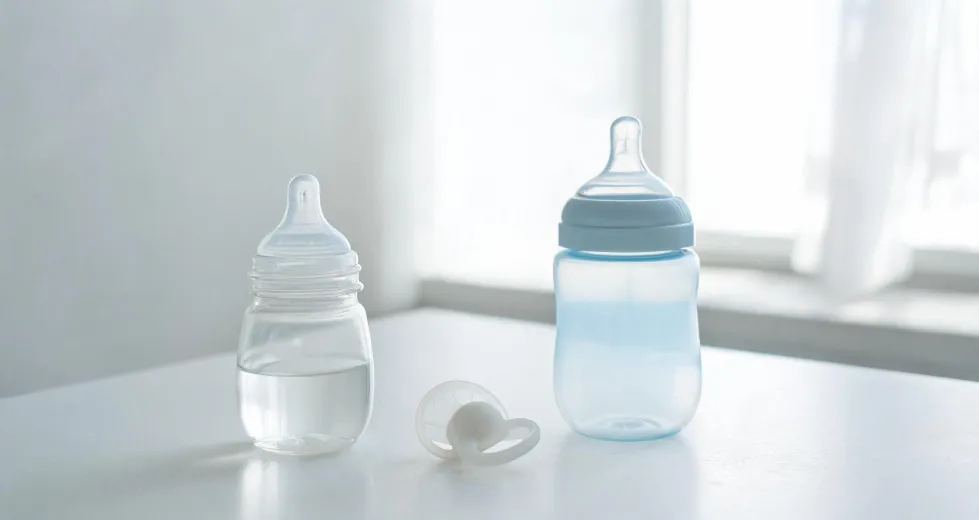
Most parents choose plastic baby bottles without a second thought, drawn in by their light weight and unbreakable body. That instinct keeps many families from considering a material that could be far safer for their newborn. We make a case here that Dr. Brown's 4 oz glass baby bottles deserve a serious place on your registry, especially if you sanitize frequently or worry about chemicals leaching into formula. The common assumption that glass is old-fashioned and impractical misses the real trade-off: the heaviness and fragility that seem like disadvantages are clues that the bottle won't bend under heat, won't scratch, and won't release unseen compounds into your baby's milk. When you feed a newborn several times a day, convenience matters, but plastic's convenience can come at a cost—a bottle that becomes cloudy, scratched, or hard to sanitize. This article will show why the cleaning advantage of glass outweighs its extra weight for families following the CDC's daily sanitizing guidance. We'll compare the two materials honestly, explain how to care for the 4 oz glass bottles, and finish with a clear verdict.
Why Most Parents Overlook Glass Bottles
Most parents choose plastic baby bottles without a second thought, drawn in by their light weight and unbreakable body. That instinct keeps many families from considering a material that could be far safer for their newborn. We make a case here that Dr. Brown's 4 oz glass baby bottles deserve a serious place on your registry, especially if you sanitize frequently or worry about chemicals leaching into formula. The common assumption that glass is old-fashioned and impractical misses the real trade-off: the heaviness and fragility that seem like disadvantages are clues that the bottle won't bend under heat, won't scratch, and won't release unseen compounds into your baby's milk. When you feed a newborn several times a day, convenience matters, but plastic's convenience can come at a cost—a bottle that becomes cloudy, scratched, or hard to sanitize. This article will show why the cleaning advantage of glass outweighs its extra weight for families following the CDC's daily sanitizing guidance. We'll compare the two materials honestly, explain how to care for the glass bottles, and finish with a clear verdict.
Dr. Brown's is a name that appears across a wide range of home-health products, and the brand's official material repeats a consistent promise: tools that are reliable, accurate, and easy to use. That phrasing appears on pages for products as different as feeding accessories and home drug tests, telling us something about the design philosophy behind their baby bottles. On its official page, Dr. Brown's describes its Home Drug Testing System with those exact words, showing the same promise across product lines. A brand that stakes its reputation on accuracy across categories is less likely to cut corners on materials that touch your baby's mouth. While that particular product is unrelated to feeding, it reveals a pattern of thorough engineering. When that mindset is applied to a glass bottle, the result is a product designed to hold up to repeated sterilization and to be cleaned without hidden crevices. So when you pick up a Dr. Brown's glass bottle, the brand context already suggests this is part of a broader commitment to dependable home-health products.
The Hidden Challenge: Daily Sanitizing
The real reason bottle material matters is tucked inside a public-health recommendation. The CDC's guidance on cleaning feeding items states that, for extra germ removal, you should sanitize feeding items at least once daily. It adds that sanitizing is particularly important when your baby is younger than 3 months, was born prematurely, or has a weakened immune system. That line changes the calculus for bottle choice, because it turns cleaning into a daily ritual. A bottle that is sanitized every day has to survive high temperatures and harsh cleaning agents without breaking down. Plastic can cope for a while, but repeated heat and scrubbing slowly degrade its surface. Glass, by contrast, does not warp, cloud, or develop micro-scratches from boiling water or steam. The CDC's daily-sanitizing standard is the recommended baseline for newborns, and once you internalize that, the material of the bottle becomes a functional requirement, not a cosmetic choice. This is why material choice deserves more attention than most parents give it.
Why does the CDC make such a strong recommendation? In 2017, the agency published new cleaning guidelines after a preterm infant died from an infection caused by bacteria that had contaminated pump parts. The mother had soaked the parts in hot soapy water in a kitchen sink for several hours before rinsing and air-drying them. Investigators found Cronobacter sakazakii in the home sink, and the baby was exposed when the parts came into contact with the bacteria during cleaning. The CDC's response was to spell out a safer routine: wash, rinse, sanitize, and dry on a clean towel, and never leave parts soaking in soapy water. This case shows that the danger is real and that cleaning technique matters as much as the product. If you are using a bottle that cannot be thoroughly cleaned, or that hides bacteria in scratches and seams, you are making the sanitizing job even harder. The new guidelines were widely covered in parenting media, highlighting the seriousness of the issue. For parents, the takeaway is to choose equipment that supports a safe cleaning routine.
The infection risk is not limited to pump parts. Any feeding item that touches breast milk or formula and then enters a baby's mouth is a potential vehicle for pathogens. The CDC's updated guidelines were reported in parenting media, with articles like Seattle's Child summarizing the new rules and the case behind them. What those articles drive home is that the cleaning step is not optional hygiene theater; it is a direct intervention against a documented hazard. For parents, the practical takeaway is to choose bottles that make the daily sanitizing ritual as foolproof as possible. A glass bottle with a smooth interior can be visually inspected after cleaning—you can see whether milk residue has been fully removed. Plastic bottles, especially after months of use, can become hazy, and that haze can hide thin films of old milk that bacteria love. The evidence from the CDC's case is a reminder that your equipment is part of your infection-control strategy, not just a vessel. That is why material matters.
Glass vs. Plastic: What Cleanability Really Means
Now let's compare glass and plastic head to head on cleanability. Glass is non-porous and chemically inert, so it does not absorb odors, stains, or residual soap, and it does not react with hot water or mild detergents. Plastic is a polymer that breaks down over time; high heat accelerates that breakdown, which is why plastic bottles often develop a milky film after many trips through the dishwasher or microwave sterilizer. That film is more than cosmetic—it can be a sign of microscopic cracks that trap bacteria. Some plastics also contain additives like BPA or phthalates, which can leach into liquids when heated. Even BPA-free plastics use replacement additives that are not always fully studied. Glass eliminates that worry entirely: it is made from silica, soda ash, and limestone, and it does not require chemical additives for flexibility. You can boil it, steam it, and put it in a dishwasher without changing its structure, so you don't have to think about what is migrating into the milk. That is a significant advantage when sanitizing is a daily task. Unlike plastic, glass will not change its properties over time.
Dr. Brown's offers a wide array of products, which reinforces that feeding design is serious engineering for the brand. The company's official product pages list a comprehensive collection of home-health solutions, from bottle nipples to breast-pump accessories. This range means the glass bottle is not a one-off novelty; it sits inside a system of interchangeable parts, with vents, collars, and nipples designed to work together. When a company builds an entire ecosystem around a bottle, it has a strong incentive to ensure the material performs under real-world conditions—including daily sanitizing. The brand's marketing language may be about accuracy and reliability, and that promise carries over to the feeding line. You can see this in how Dr. Brown's bottles are positioned as the considered choice for parents who want an anti-colic system, not just a cheap vessel. That positioning only works if the material lives up to the engineering. The official site even describes multiple product lines under one brand umbrella, showing the depth behind the bottle.
So when does glass actually win? The decision comes down to your situation. If you are going to sterilize bottles every day—which the CDC recommends for infants under 3 months, premature babies, or those with weak immune systems—glass is the stronger candidate. The smooth, heat-resistant surface makes daily sanitizing easier and more reliable. If you are mostly bottle-feeding an older, healthy baby and you are careful to replace plastic bottles as soon as scratches appear, plastic might be acceptable. But even then, you are trading convenience for an ongoing background worry about micro-cracks and chemical leaching. For a newborn, the weight of the glass bottle is a minor price for certainty. The bottle is small enough to be handled comfortably, and the material gives you one less thing to worry about. In short, the daily sanitizing requirement flips the usual preference for plastic on its head. Glass simply holds up better under the routine.
How to Clean and Sterilize Your 4 oz Glass Bottles
If you decide the glass bottle is worth it, the cleaning routine is straightforward. Start by disassembling the bottle completely: remove the nipple, collar, and any vent insert. Rinse each part in warm water to remove milk residue before it dries. Then wash everything in hot, soapy water using a bottle brush that can reach the bottom. Pay special attention to the threads of the collar and the inside of the nipple, where milk film tends to hide. After washing, rinse thoroughly under running water—do not leave parts soaking in a sink. Then sanitize using a steam sterilizer, microwave sterilizer bag, or a pot of boiling water. For glass, boiling for 5 minutes is safe and effective. Allow the parts to air-dry on a clean rack, and handle them with clean hands when reassembling. To avoid cracking, warm the glass bottle gradually with milk—do not pour boiling water into a cold bottle. These steps follow the same logic the CDC applies to pump parts.
The CDC's cleaning guidance reinforces these steps, and it specifically warns against soaking feeding parts in a sink of soapy water—the exact practice that allowed bacteria to colonize the pump parts in the 2017 case. Instead, wash immediately after use, use dedicated brushes, and sanitize once a day. For bottles used multiple times a day, wash after each feeding and sanitize once at the end of the day. Glass makes this easier because you can see when it is truly clean. The CDC also advises that all parts be completely air-dried, as moisture encourages bacterial growth. A glass bottle dries quickly and does not hold water droplets in scratches. If you use a dishwasher, place glass bottles on the top rack and use the heated dry cycle; the high heat is fine for glass. For plastic parts like nipples and collars, check the manufacturer's instructions, as some cannot withstand prolonged high heat. But the glass bottle itself is the part you can always trust with the harshest cleaning.
The Verdict: When Glass Bottles Win
The verdict is clear: for parents who need to sanitize bottles daily, or who don't want to think about chemicals leaching into their baby's milk, Dr. Brown's 4 oz glass bottle is the better choice. The extra weight is a non-issue, and the fragility is manageable with reasonable care. What you get in return is a bottle that does not scratch, does not cloud, and does not release unknown compounds at high temperatures. That is a strong trade for peace of mind grounded in material science, not marketing. If your baby is under 3 months, premature, or immunocompromised, the daily sanitizing standard makes glass the low-risk option. Even for older babies, the cleanability advantage remains, especially when using formula that can leave lipid films that are hard to remove from plastic. This is not about preference; it is about avoiding a material that degrades under the exact conditions you need it to survive. The evidence from the CDC's sanitizing guidance supports that conclusion. And for a newborn, that difference can matter every single day.
So how do you make the final call? Use this rule: if you expect to sanitize feeding items at least once a day, choose glass. If you never sanitize and only wash with soap and water, plastic is lighter and won't shatter, but you may need to replace it more often. For most new-baby households, daily sanitizing is the realistic scenario for the first few months, which pushes the scale toward glass. Dr. Brown's glass bottles are especially practical because the smaller size is easier to hold and clean, and you can buy a pack of several to rotate through the day. Start with two or three 4 oz bottles for the early weeks, then add larger sizes as your baby's appetite grows. The 4 oz size is perfect for those first small feedings, and the glass construction means they will still be in great shape when you pass them down or donate them after your baby outgrows them. That way, you get the benefit of glass without overcommitting to a single size.
Choose the bottle that works with your sanitizing routine, not against it.

Miriam Adler
Miriam Adler is an educational and STEM toy analyst specializing in busy boards, Montessori-style manipulatives, learning towers, sound books, reading pens, pretend-play sets, and early learning toys. She applies ASTM F963 and IEC 62115 methods while evaluating small-part hazards, accessible edges, switch durability, sound output, battery access, pull force, and age-appropriate task complexity. Her work helps parents, retailers, and product teams choose learning products that align developmental goals, supervision needs, interaction design, and the intended age stage.
Leave a Reply